


Description
The "Watchmaker’s Watchmaker" Icon
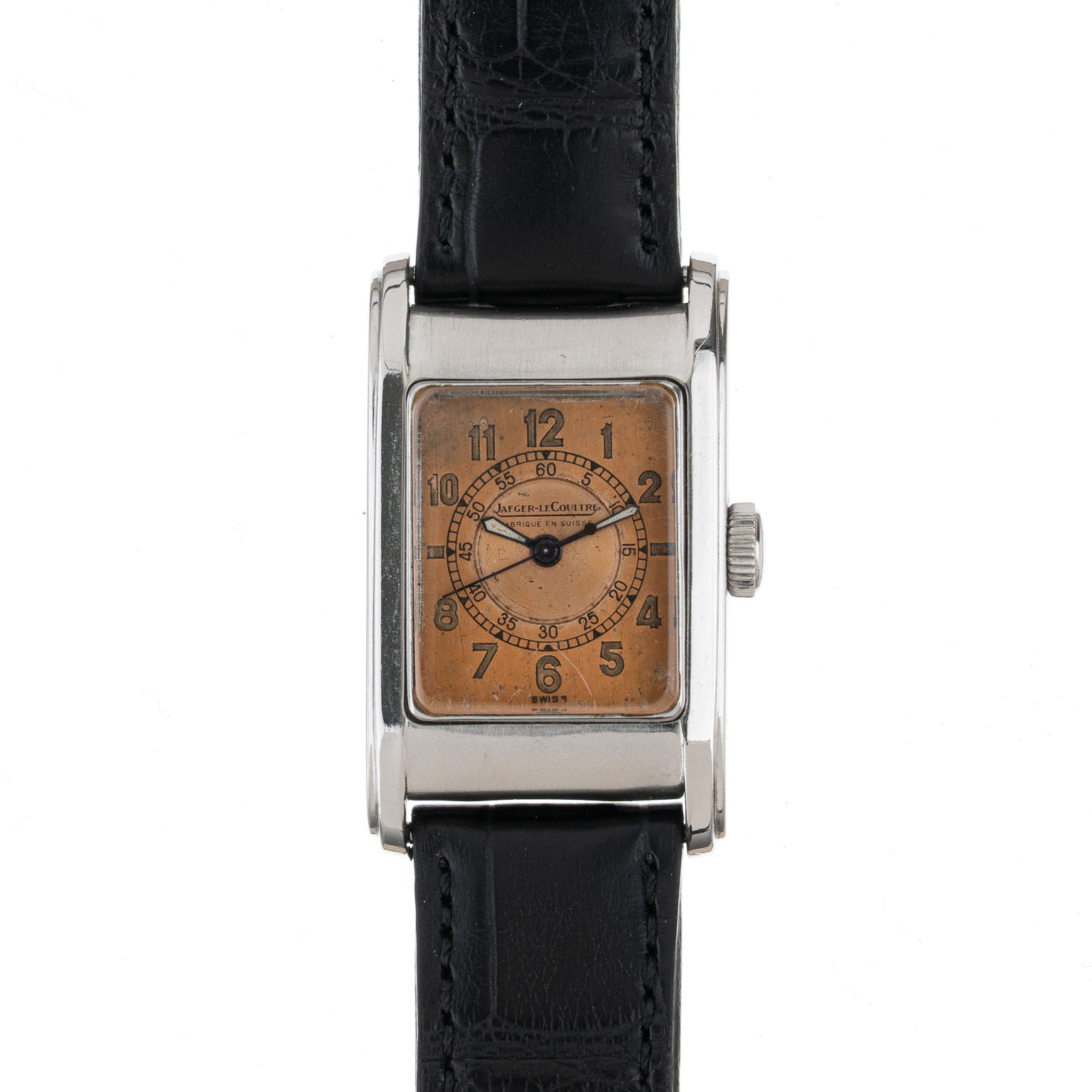
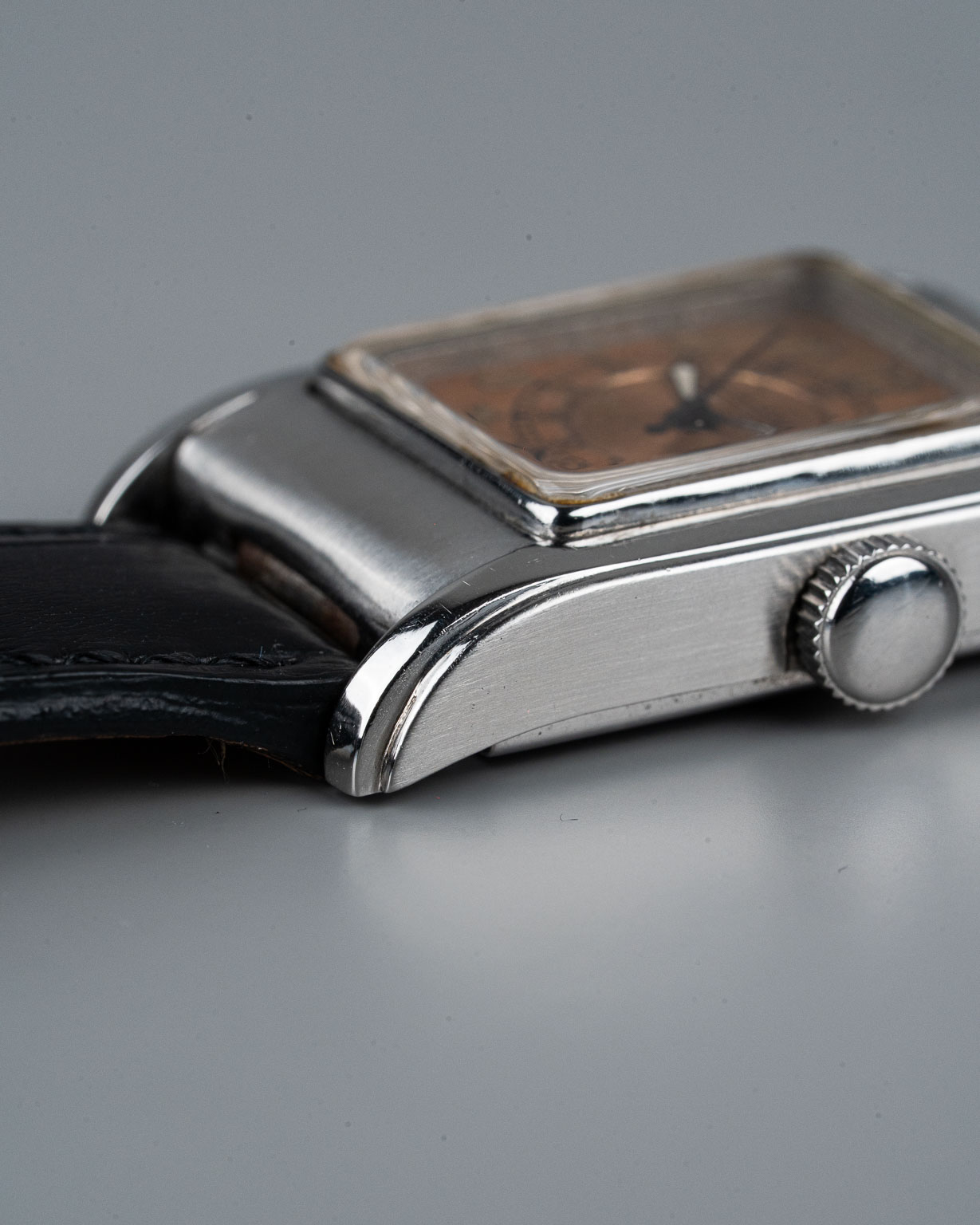
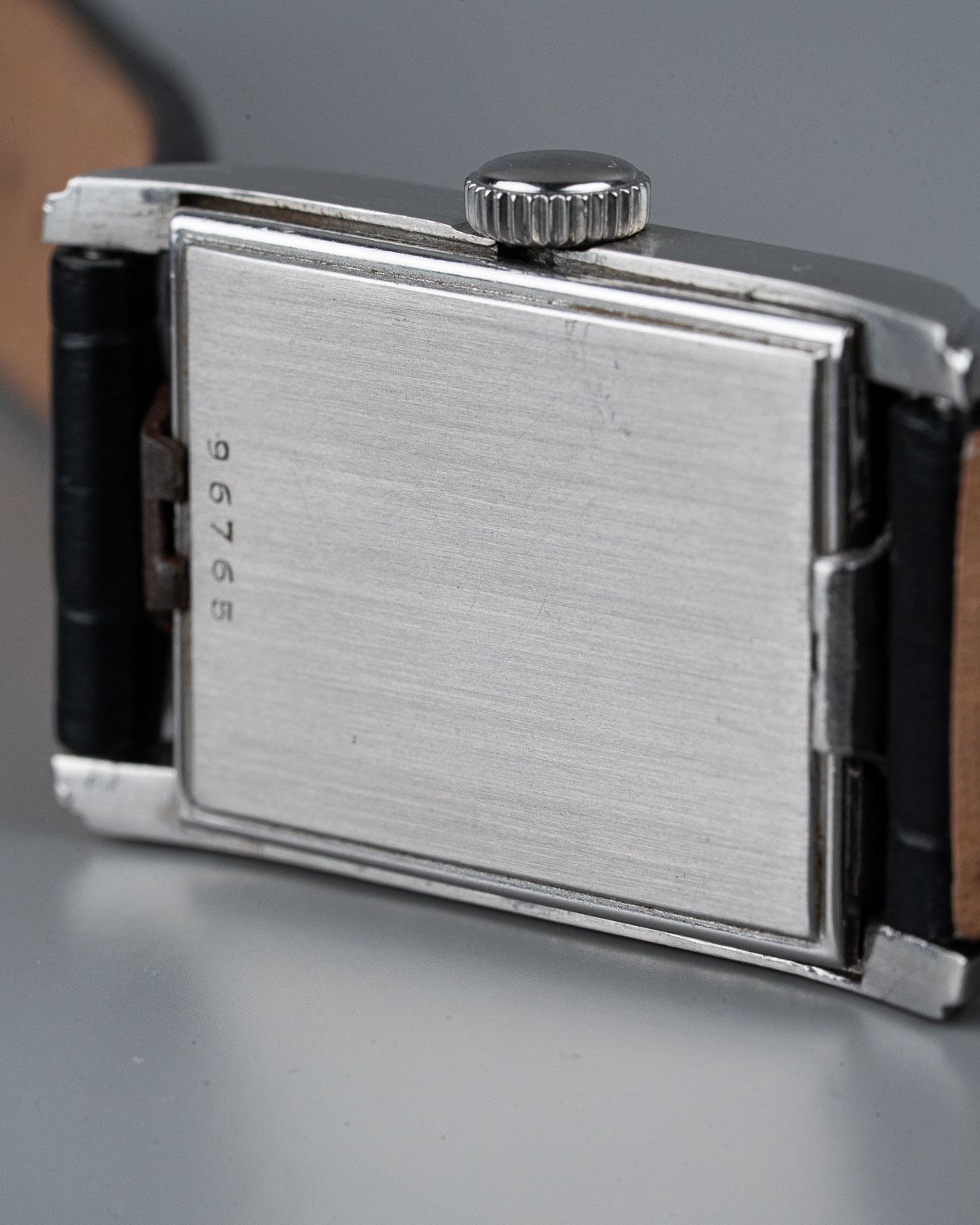
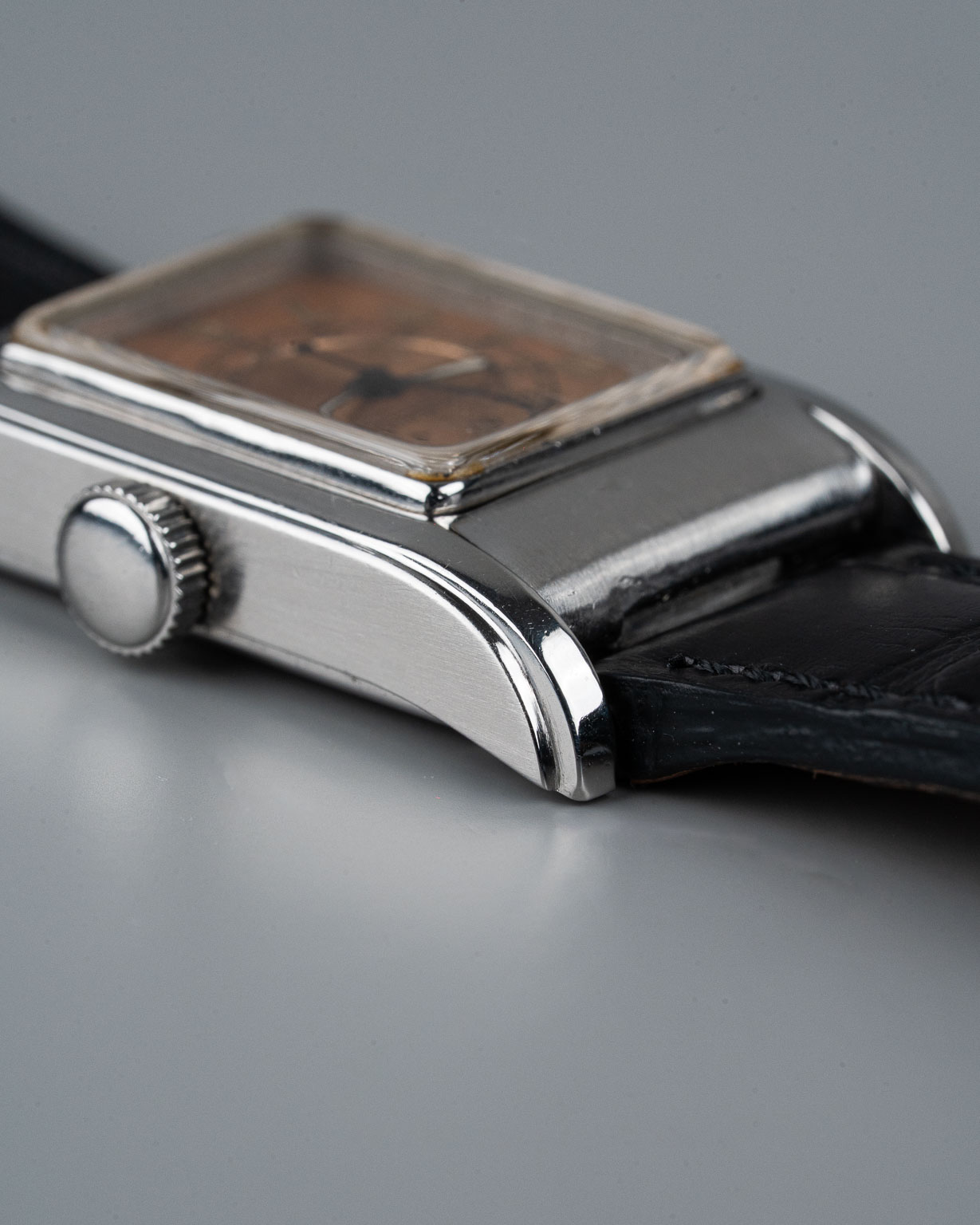
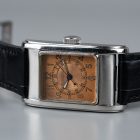
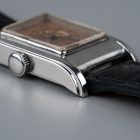
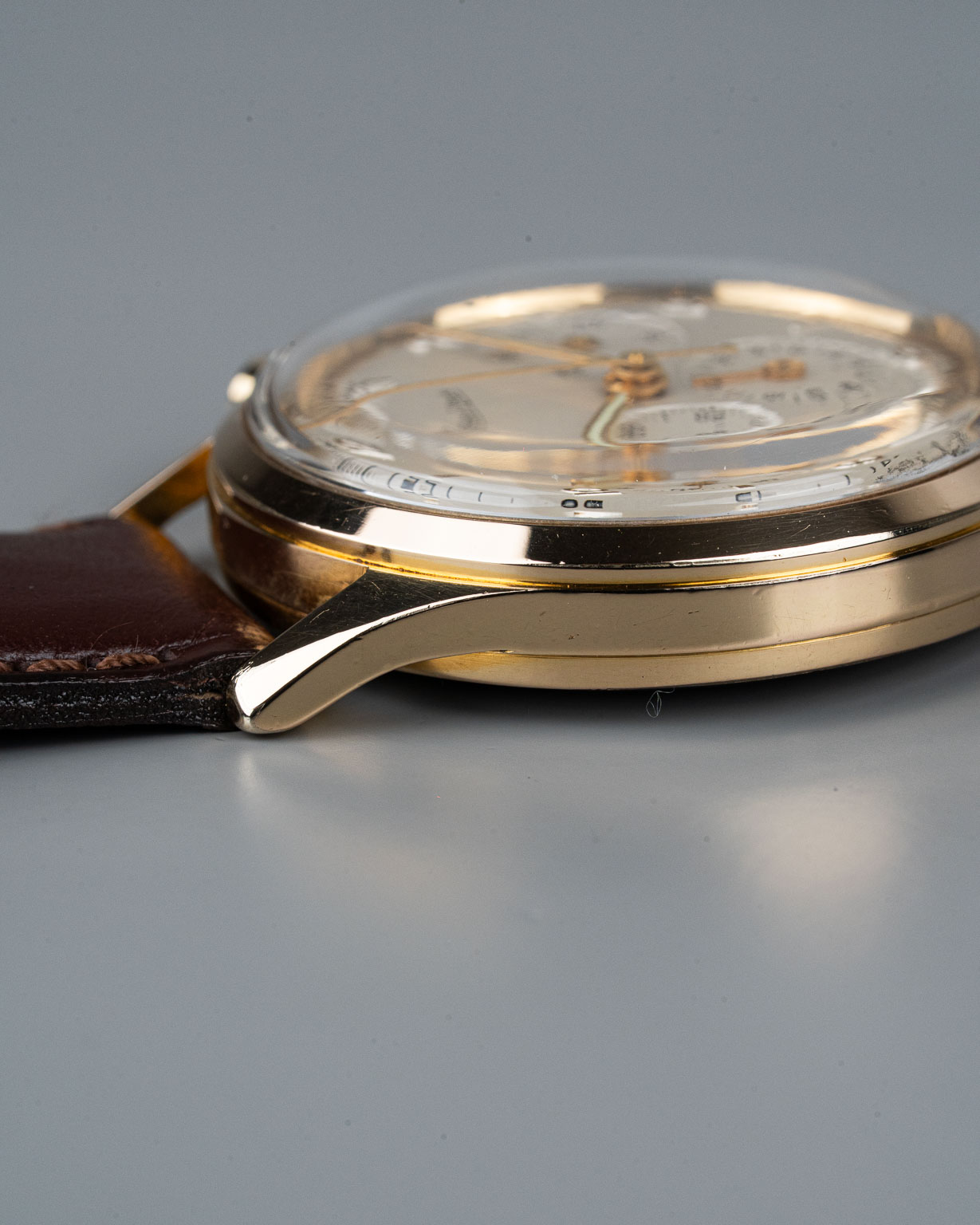
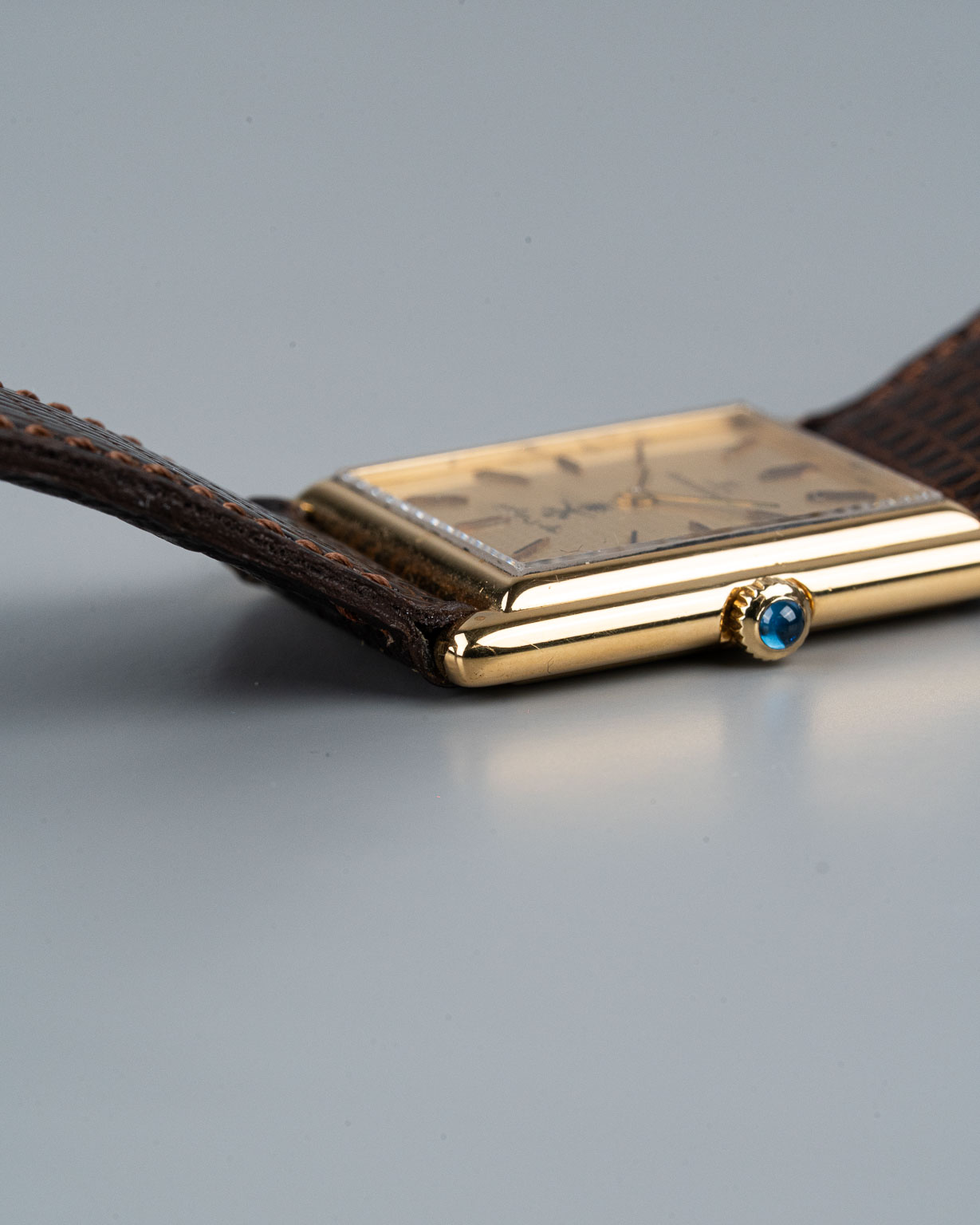
This mid-century “Tank” is a masterclass in horological heritage. Long before the quartz crisis, Jaeger-LeCoultre was the secret supplier for brands like Cartier and Patek Philippe, and this rectangular model illustrates why. With its scientific sector dial and rare sweep central seconds, it represents an era where JLC was pushing the boundaries of what a rectangular movement could achieve in terms of precision and layout.
About the dial
Brand
Jaeger-LeCoultre
Dial
Copper/Salmon “Sector” Dial with Radium Lume
Diameter
22mm x 38mm
Box
Yes
Papers
Yes

1930
First moonlanding
38 mm
For the adult hand
Copper Capped
A thin layer of gold
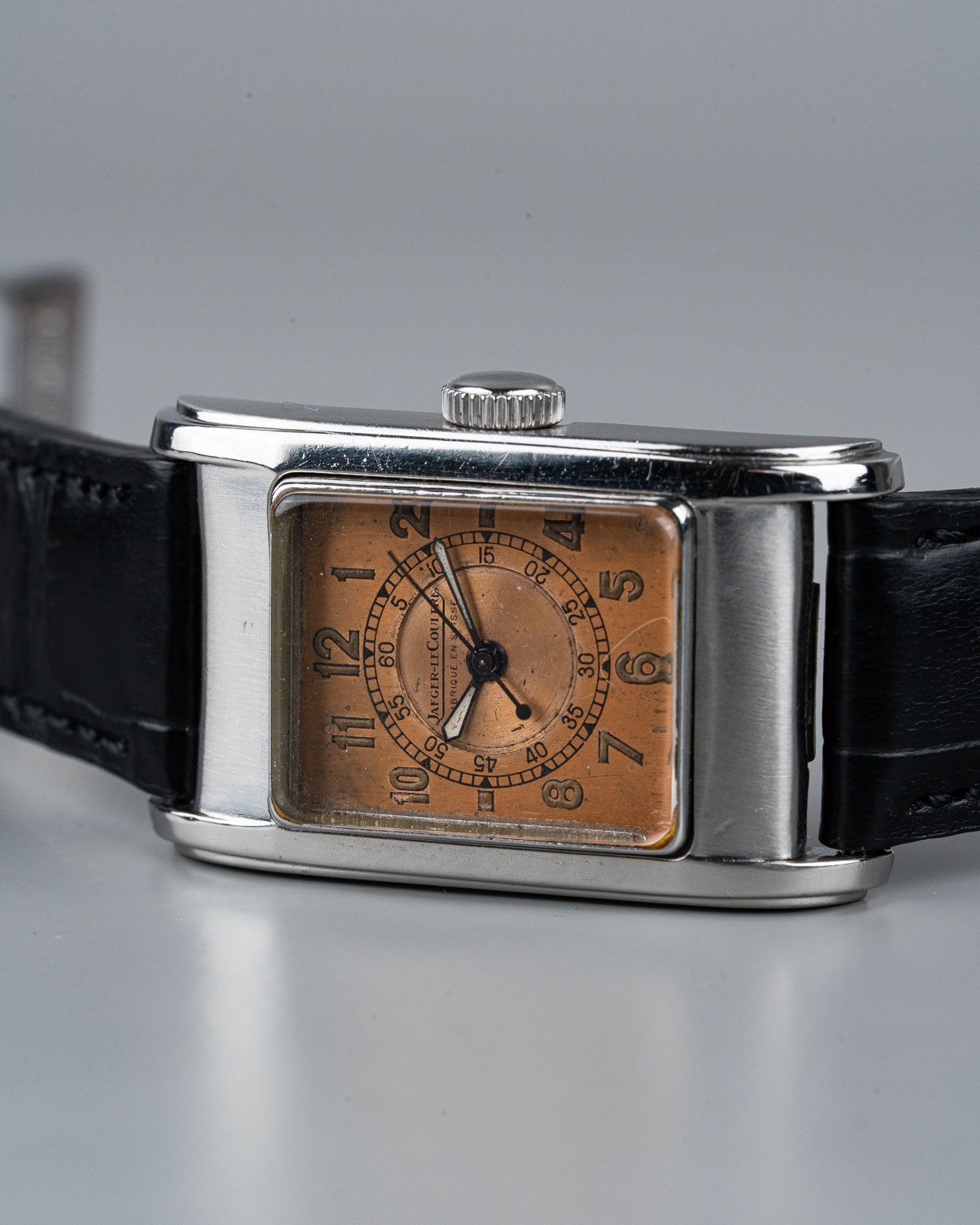
A 1940s survivor, aged to perfection.
Condition:
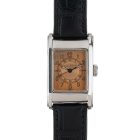
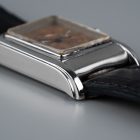
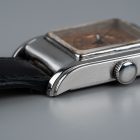
This 1940s timepiece features a patinated copper sector dial. The rich, mottled texture is the result of decades of natural aging (often called a “tropical” dial), a detail highly prized by collectors for its authenticity.
The Heart:
It is powered by a high-grade, manual-wind Jaeger-LeCoultre caliber (likely the Cal. 410 or 450). Unlike most rectangular watches of the time which featured a small sub-dial at 6 o’clock, this movement features a more complex central sweep seconds hand.
Guarantee:
As a vintage mechanical instrument, it should be serviced by a specialist. While robust for its age, it does not carry a modern warranty unless provided by a specific dealer.
Authenticity:
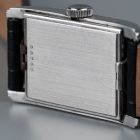
Features the original “Fabriqué en Suisse” (Made in Switzerland) signature beneath the brand name, confirming its origin from the workshop in Le Sentier.
1900
1910
1920
1930
1940
1950
1960
1970
1980

Under-the-Radar Heritage
What brand has created over 1,200 unique calibers and is known as the "Grand Maison"?
Jaeger-LeCoultre stands in a category of its own. This rectangular model was born in the shadow of the Reverso, yet it holds a distinct place for those who prefer fixed-case elegance. The “Sector Dial” (also called a scientific dial) was designed for legibility, with concentric rings used to track minutes and seconds with precision. It is heritage you can feel every time you wind the crown.
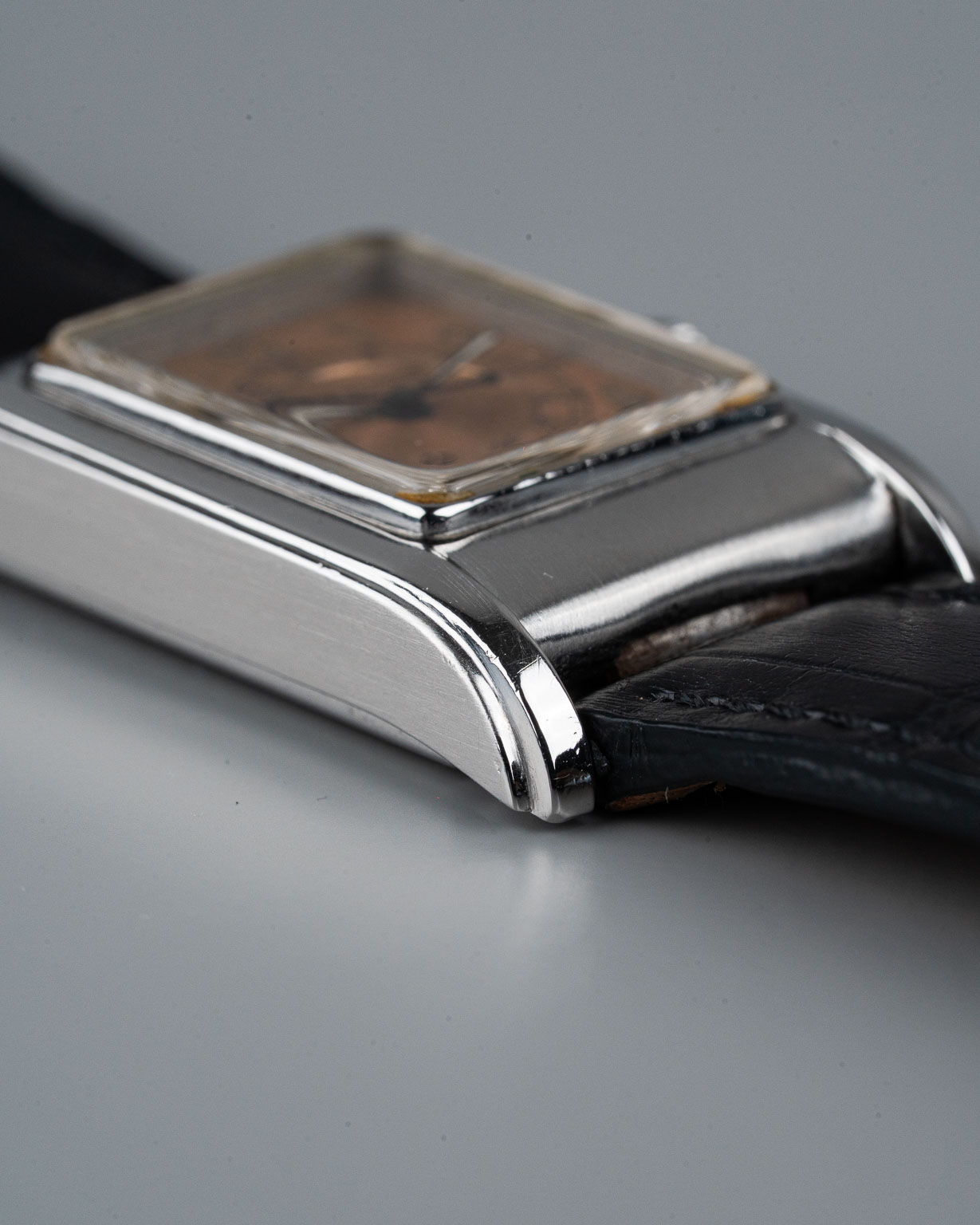
A glimpse into the golden era of watchmaking.
This watch isn’t just a tool for telling time; it is a survivor of the 1930s—an era of optimism, classic cars, and the birth of modern design. It remains as relevant today as it was the day it left the workshop in La Chaux-de-Fonds.










There are no reviews yet.